
Germany has become one of the most practical and popular choices for international students planning to Study in Germany — especially those aiming for technical master’s degrees, IT and data science programs, management, MBA, or engineering specializations. In 2026, the reasons remain the same that made Germany attractive over the past decade: low tuition at public universities, a large and growing number of English-taught programs, predictable intake cycles, and strong links between universities and industry that feed into real career opportunities. This post breaks down the costs, the intake timeline, and how studying in Germany can lead to meaningful careers with the facts and practical tips you need to decide and plan.
1. The financial picture: tuition, living costs, and real affordability
One of Germany’s biggest draws is affordability. Many public universities in Germany do not charge tuition fees for international students at the bachelor’s and master’s levels, you typically pay only a modest semester contribution that covers administration, student services and sometimes public transport (often €150–€350 per semester). A few master’s programs, especially specialized or professional degrees and those at private universities, do charge tuition; these can range from a few thousand to €20,000+ per year depending on the institution and program.
Living costs vary by city. Expect monthly budgets roughly like this:
- Smaller cities/university towns: €700–€900 per month.
- Mid-sized cities: €800–€1,100 per month.
- Big cities (Munich, Hamburg, Frankfurt): €1,000–€1,400+ per month.
These costs include rent (often the highest cost), food, health insurance, local transport, study materials and modest leisure. Student dorms and shared flats (“WG”) reduce rent significantly; early application to accommodation can save hundreds per month.
Key practical tip: calculate total yearly cost by adding semester contributions and living expenses. For many students, a combination of low/no tuition and part-time work opportunities makes Germany more affordable than many Anglophone alternatives. Students who are looking for a smoother transition into Germany are recommended to learn at least the A2 level of German before traveling to Germany and complete B1 level by the end of their first semester. Language plays a critical role in day-to-day practical communications, building a network and exploring future internship and job opportunities.
2. Intakes and application timing: when to apply and what to watch for
German universities commonly have two intake windows:
- Winter intake (main intake): Programs usually start in September/October. This is the larger intake; most master’s programs, administrative deadlines and scholarship cycles are aligned with it.
- Summer intake: Starts around March/April. Fewer programs are offered in summer, but some universities and private programs do accept students then.
- Application deadlines vary by university and program. For winter intake you’ll often see deadlines from late spring to mid-summer (April–July), but competitive or funded programs can close earlier. For summer intake, deadlines commonly fall in the autumn to early winter months.
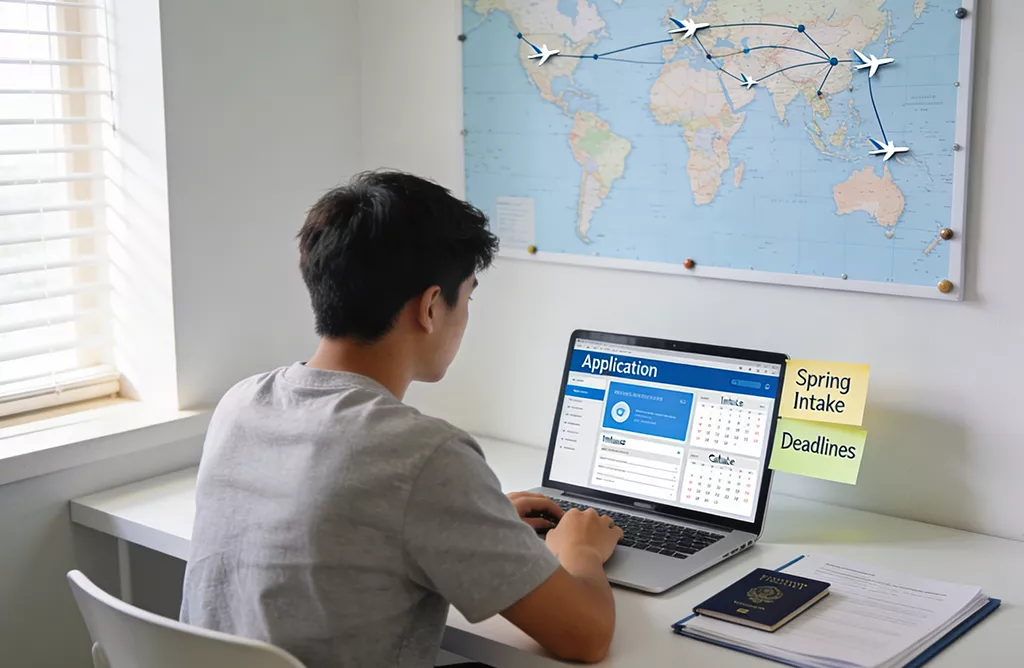
Practical tip: Begin your application process at least 8–10 months before your desired start date. This gives time for document collection, language tests, credential evaluations, and visa processing. Some students even start their application process 1 year in advance by applying for APS certificate, giving IELTS exam, getting a German language certification and applying for the universities as soon as the applications open. Starting early gives you enough time to build your profile and target admissions at your dream universities.
3. Program options: English-taught and technical strengths
Germany has rapidly expanded English-taught master’s programs, especially in technical areas — computer science, data science, AI, mechanical and electrical engineering, information systems, biotechnology, civil and electronics. These programs combine rigorous coursework with applied projects, internships and research collaborations with industry.
If you are aiming for a technical master’s, target programs that highlight mandatory internships or capstone industry projects. These practical elements are often the fastest path to local networks and job offers.
Practical tip: check course modules and employer partnerships on university pages. Programs with mandatory internships or industry project modules typically produce higher placement rates.
4. Work while studying and internships: building a CV in Germany
Students can work part-time during their studies (there are limits on hours for non-EU students), and many programs encourage or require internships. Part-time work can help with day-to-day expenses, but the real value is the work experience and local references you build.
Internships — even short ones — are often the bridge from campus to a full-time role. German companies value demonstrated practical skills, so internships in relevant tech stacks or engineering workflows significantly improve employability.
Practical tip: start networking early with university career services, alumni, and professors who have industry contacts. Attend local meetups and career fairs (sometimes held virtually for international students).
Pro tip: Consistently build your German language proficiency up to C1 level over the course of 2-3 years.
5. Post-study career routes: how studying in Germany leads to jobs
Germany offers clear pathways for graduates to remain and work after finishing their degree. International graduates are typically eligible to extend their residence permit for a period to look for work after graduation (many graduates use this time to convert internships into full-time roles). Germany is also a strong market for skilled professionals in IT, engineering, and data science — sectors that actively recruit international talent.
Additionally, graduates with qualifying salaries may be eligible for the EU Blue Card, a work-and-residence permit that simplifies longer-term settlement and mobility within EU member states.
Practical tip: choose programs with strong career placement or industry liaison offices. Your university’s alumni placement rates and advertised salary ranges are useful indicators of job market alignment.
6. Language and cultural integration: English is enough to start, but German helps
Many master’s programs are fully in English, and you can often land internships and entry-level jobs in English-speaking teams. However, learning German will broaden your job options and ease your daily life, especially for internships in smaller firms or roles requiring local client interaction. Even basic conversational German accelerates social integration and workplace mobility.
Practical tip: Start learning German early. Short intensive courses or evening classes at the university language center are effective. Choose a course as per your learning curve and also consider a personal trainer to quickly build your language skills.

7. Scholarships, funding and financial planning
While many public programs remove the tuition burden, living costs still require planning. Scholarships (Erasmus+, DAAD, university-specific awards) can help, as can research assistantships and paid internships. Banks and financial institutions offer student-friendly loan products in some countries; research options specific to your home country as well.
Practical tip: apply to scholarships early, and use university financial aid pages to identify assistantship and research openings.
8. Final checklist: how to make your Germany plan actionable
Choose programs and shortlist 5-10 universities (focus on course modules, industry links, and intake).
Prepare documents (transcripts, SOP, recommendation letters, language test) and get credential evaluations if required.
Apply early for accommodation and scholarships.
Prepare finance proof and health insurance for visa processing.
Start German basics and connect with alumni or current students on social platforms.
Conclusion: Start Early and Get Expert Guidance
Germany continues to stand out in 2026 as one of the most strategic destinations for higher education — offering affordable tuition, globally respected degrees, strong industry exposure, and clear post-study career pathways. However, success in the German application process depends heavily on early planning, correct documentation, university shortlisting, and proper visa preparation.
This is where expert guidance from trusted Abroad education consultants, experienced Overseas education consultants in Bangalore, and reliable Study abroad consultants near me can make a real difference.
SNY Cosmos Overseas, a leading Europe-focused education consultancy, has been guiding students for higher education in Germany for over 20 years. With deep experience in German university admissions, APS processing, blocked account guidance, visa documentation, and interview preparation, SNY Cosmos has helped thousands of students successfully transition from Indian classrooms to German campuses.
With offices in:
- Chennai
- Hyderabad
- Vijayawada
- Bangalore
- Pune
SNY Cosmos offers structured support from course selection to visa approval — including SOP tips, university applications, financial planning, accommodation guidance, and pre-departure support.
Important: Start 8–10 Months in Advance
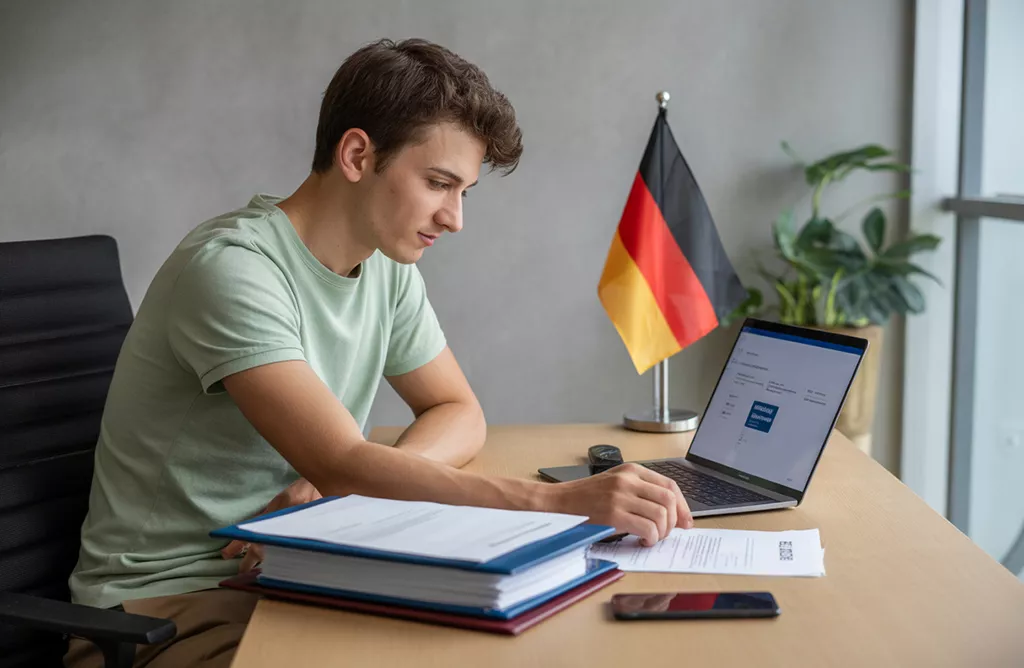
For Germany intakes (Winter: September/October | Summer: March/April), students should ideally begin the process at least 8–10 months before the intake. Early planning ensures:
- Better university options
- Timely APS and document processing
- Smoother visa appointments and approval
- Higher chances of securing accommodation
- Less stress for students and parents
If Germany is on your radar for 2026 or 2027, now is the right time to act.
Take the First Step
Contact SNY Cosmos Overseas today and begin your Germany application process with a clear roadmap and expert mentorship.
- Book a counselling session
- Get your profile evaluated
- Register and Receive a personalized university shortlist
- Plan your Germany journey with confidence
Start early. Plan smart. Secure your future in Germany.
FAQs
1. How much does it cost to study in Germany for a Master’s degree in 2026?
For most public universities in Germany, tuition fees are either very low or not charged, and students typically pay a semester contribution of around €150–€350. Living expenses range between €700 and €1,400 per month depending on the city. Overall, Germany remains one of the most affordable study destinations in Europe.
2. What are the intake months for universities in Germany?
Germany mainly has two intakes:
- Winter Intake (September/October) – the primary intake with the largest number of programs.
- Summer Intake (March/April) – fewer programs available.
Students should begin preparations at least 8–10 months before the desired intake.
3. Can international students work while studying in Germany?
Yes, international students are allowed to work part-time during their studies, subject to visa regulations. While part-time work can help cover daily expenses, students are advised not to rely solely on it for tuition or living costs and to be financially well prepared. Internships related to your field significantly improve employability after graduation.
4. What are the job opportunities after completing a Master’s in Germany?
Germany has a strong demand in IT, Data Science, AI, Automotive, Mechanical Engineering, and other technical fields. After graduation, students can apply for an 18-month job search residence permit to secure employment. Qualified professionals may also apply for the EU Blue Card for long-term career opportunities.
5. Is German language mandatory to study in Germany?
Many Master’s programs are offered in English, especially in technical fields. However, learning German significantly improves internship opportunities, job prospects, workplace integration, and long-term career growth. Students are strongly encouraged to reach at least B1 level during their studies.