
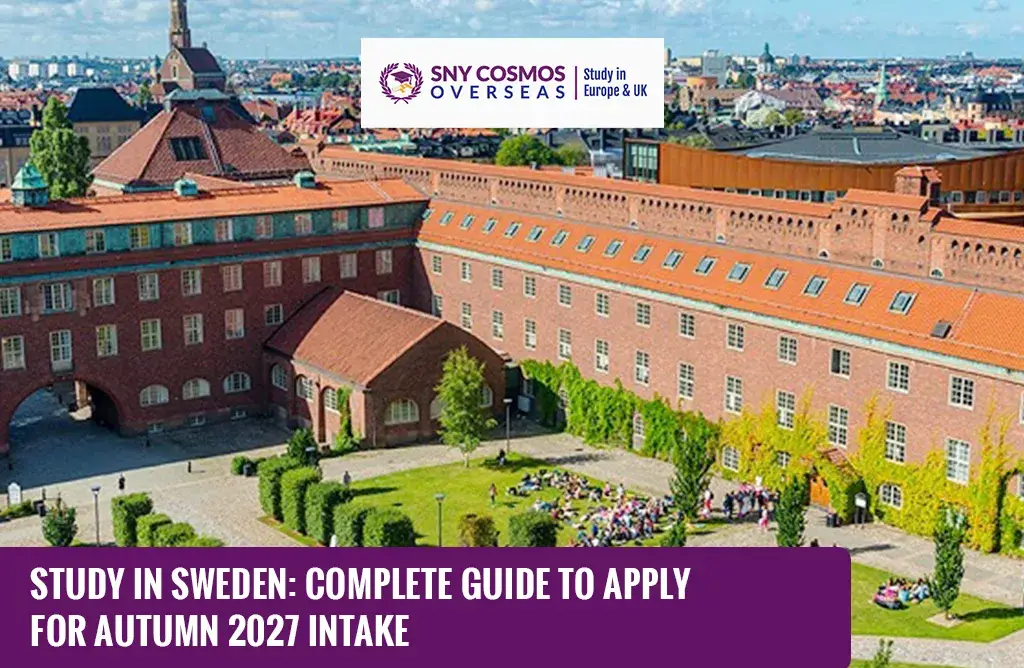
Sweden is becoming a popular European destination for students looking for high-quality education, innovative teaching and internationally recognised degrees. If you are planning to study in Sweden for the Autumn 2027 intake, starting your preparation early can make the admission process much easier.
Sweden offers a wide range of English-taught bachelor’s and master’s programmes in engineering, technology, business, sustainability, life sciences, data science and many other fields. Students planning their applications can also seek guidance from Abroad education consultants such as SNY Cosmos Overseas to understand the admission process and requirements.
Here is a complete guide for Indian students planning to study in Sweden in 2027.
Why Study in Sweden?
Students choose Sweden because its universities focus strongly on innovation, research, independent thinking and practical learning.
Some important benefits include:
- Internationally recognised universities
- Large selection of English-taught programmes
- Strong technology and innovation ecosystem
- Research-focused education
- Scholarship opportunities
- Multicultural student environment
- Career opportunities in technology, engineering, sustainability and other industries
Most bachelor’s and master’s programmes in Sweden begin during the autumn semester, making the Autumn intake particularly important for international students.
Autumn 2027 Sweden Application Dates
International students should normally apply through Sweden’s first admission round.
For the Autumn 2027 intake, the official schedule is:
- Applications Open: 16 October 2026
- Application Deadline: 15 January 2027
- Application Fee Deadline: 1 February 2027
- Supporting Documents Deadline: 1 February 2027
- Master’s Admission Results: 1 April 2027
- Bachelor’s Admission Results: 8 April 2027
- Semester Begins: August/September 2027
Students requiring a Sweden study visa or residence permit should preferably use this first admission round because it provides more time for tuition payment, visa processing, accommodation and travel preparation.

Popular Universities in Sweden
Students planning to study in Sweden for Indian students can explore institutions such as:
- KTH Royal Institute of Technology
- Lund University
- Uppsala University
- Chalmers University of Technology
- Stockholm University
- University of Gothenburg
- Linköping University
- Umeå University
- Stockholm School of Economics
- Örebro University
Admission requirements vary depending on the university and programme. Study abroad consultants near me can also help students understand programme requirements and application procedures.
Popular Courses in Sweden
Sweden has particularly strong programmes in areas connected with technology, innovation and sustainability.
Popular study options include:
- Computer Science
- Artificial Intelligence
- Data Science
- Mechanical Engineering
- Automotive Engineering
- Electrical Engineering
- Renewable Energy
- Biotechnology
- Business Management
- Finance
- Supply Chain Management
- Sustainability
- Public Health
- Design
Students should shortlist programmes based on their previous academic subjects and long-term career goals.
Sweden Admission Requirements
The requirements to study in Sweden depend on whether you are applying for bachelor’s or master’s studies.
Master’s applicants generally need:
- Recognised bachelor’s degree
- Academic transcripts
- Proof of English proficiency
- Passport
- Programme-specific documents
- Some universities or programmes may additionally request:
- Statement of Purpose
- CV
- Letters of recommendation
- Portfolio
- Relevant work experience
Bachelor’s applicants normally need recognised upper-secondary qualifications along with programme-specific subject requirements.
Always check the individual programme page before applying. Abroad education consultants such as SNY Cosmos Overseas can also assist students in understanding the documents required for their selected programmes.
English Language Requirements
English proficiency is an important admission requirement for most international programmes.
Universities may accept recognised tests such as IELTS or TOEFL depending on their requirements.
Students also frequently search for opportunities to study in Sweden without IELTS. While alternative English-language evidence may be accepted in certain circumstances, this is not universal.
Never assume that Medium of Instruction or previous English-medium education will automatically replace IELTS. Check the official requirements applicable to your academic background and selected programme.

Scholarships to Study in Sweden
Students can explore scholarships offered by Swedish universities as well as other eligible scholarship programmes.
Scholarships may cover part or, in selected cases, a larger portion of tuition fees.
Competition can be high, so students searching to study in Sweden with scholarship should research scholarship eligibility and deadlines at the same time as university applications rather than waiting for admission results.
Start Preparing Early
For Indian students targeting the Sweden Autumn 2027 intake, September and October 2026 are excellent months to complete university research and prepare documents.
A good timeline is:
- September–October 2026: Shortlist courses and prepare documents
- 16 October 2026: Applications open
- October 2026–January 2027: Complete applications
- 15 January 2027: Application deadline
- 1 February 2027: Complete fee/document requirements
- April 2027: Admission results
- After admission: Tuition, residence permit, housing and travel preparations
- August/September 2027: Begin studies in Sweden
Applying early also gives you time to correct missing documents or application issues.
Frequently Asked Questions
Applications for the Autumn 2027 intake open on 16 October 2026, and the main application deadline is 15 January 2027.
Yes. Many Swedish universities offer bachelor’s and master’s programmes fully taught in English.
Not always. Some universities may accept alternative proof of English proficiency, but requirements vary by programme and university.
Yes. Swedish universities and other organisations offer scholarships based on academic performance, eligibility and programme criteria.
Students generally need academic transcripts, a recognised previous qualification, proof of English proficiency, passport details and any programme-specific documents.

