
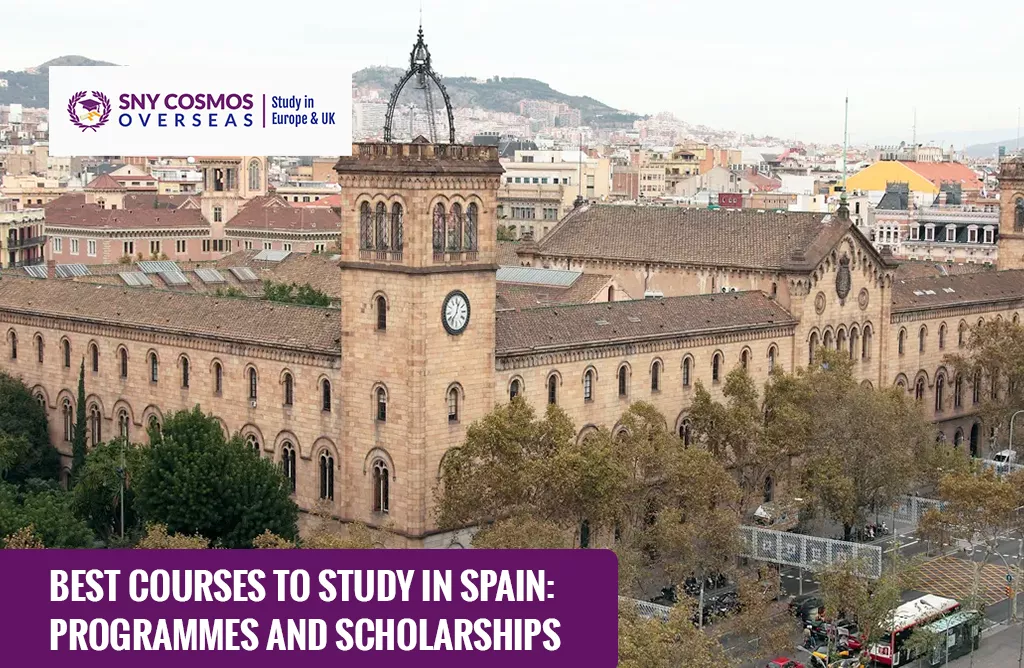
Spain can offer students a chance to pursue higher education while experiencing a different culture and lifestyle. From business and technology to design and sustainable energy, students can explore subjects that match different interests and career plans. However, selecting a program requires more than choosing an attractive destination.
This guide explores some of the best courses to study in Spain, the factors worth comparing, and scholarships that may help eligible students manage their education expenses. If you need help exploring universities and suitable programs, Study abroad consultants near me can help you understand your options.
Why Study in Spain?
Spain provides universities that are public and private, along with other specialized universities like those for business studies, engineering, and arts. Programs conducted in English are offered, but mainly in postgraduate courses because Spanish is the main language of teaching. Learning Spanish will help you in daily socialization too.
Before you choose your university, you should take into consideration what language is being used to teach your whole program, including the compulsory parts. Compare everything about each institution before you select any.
Best Courses to Study in Spain
1. Business Management and International Business
If leadership, business decision-making, and organizational functions interest you, then business is an area to explore. Take a look at courses in management, international business, entrepreneurship, and business analytics.
Look for programs that cover business strategy, financial planning, marketing techniques, and operational management through hands-on projects. If you are considering an MBA course, pay special attention to the work experience requirement of the program. There might be a management course more suitable for your profile than an MBA.
2. Computing, AI and Data Analytics
Students with an interest in programming, mathematics and problem-solving can explore computing specialisations. UPC’s current master’s catalogue includes options in artificial intelligence, cybersecurity and engineering-related data science.
Evaluate the balance between theory and application. Relevant subjects may include machine learning, software development, statistics and data management, depending on the programme. Check prerequisite subjects before applying, especially if your previous degree is outside computing or engineering.
3. Engineering and Renewable Energy
Engineering can be a good choice for those who want to have a career in a technical field. Depending on their current level of education, the students should consider programs in mechanical engineering, electrical engineering, telecommunication engineering, or energy engineering.
For instance, UPC provides a master’s degree in Renewable Energy Engineering dealing with such topics as smart grids, energy efficiency, and environmental issues. In order to choose the best program, it is necessary to consider laboratory practices, research projects, and specialities.
4. Tourism and Hospitality Management
Consider tourism and hospitality if you enjoy service management, customer experience and business operations. When reviewing programmes, look for content in hotel management, destination planning, events and sustainable tourism.
Practical experience deserves particular attention. Ask whether an internship is compulsory, how placements are arranged and which languages employers expect. A course taught in English does not necessarily mean every internship will operate entirely in English.
5. Architecture and Design
Creative students can explore architecture, interior design, product design and related subjects. Compare studio teaching, portfolio development, digital tools and the balance between artistic ideas and practical execution.
Check whether applicants need a portfolio or specific previous qualifications. If your goal involves professional registration, investigate the qualification’s recognition in your intended country of practice before enrolling. Select a programme for its suitability to your goals, rather than its title alone.

Scholarships to Study in Spain
Scholarships should form part of your research from the beginning. Institutions may offer awards based on academic achievement, financial circumstances or other selection criteria. IE, for example, provides master’s scholarship opportunities.
Erasmus Mundus scholarships are another route for eligible applicants to participate in joint master’s programmes. These involve study across countries; check whether your chosen programme includes a Spanish institution.
Read each award’s nationality restrictions, eligible courses, funding coverage and deadlines. Scholarships are competitive, so prepare a realistic budget without assuming funding is guaranteed.
For assistance comparing programme requirements and scholarship opportunities, Abroad education consultants can help you explore relevant options and understand the factors to consider before applying.
Plan your Studies with SNY Cosmos
To identify the best courses you can take in Spain, based on your profile, it is necessary to analyse academic criteria, curriculum, language of instruction, and overall cost. Get in touch with SNY Cosmos to discuss your academic aspirations and your next moves.
Moreover, you can contact study abroad consultants near me and discuss your choice of subjects and universities. To get more information about planning an education abroad, you can contact abroad education consultants and go through the options that suit your academic profile and budget.

Frequently Asked Questions
Options worth exploring include business management, computer science, engineering, renewable energy, tourism, and design. Your ideal program should align with your academic history, personal interests, and future professional plans.
Many Spanish universities provide courses taught in English, particularly for students pursuing postgraduate qualifications. Confirm the language of every compulsory component before applying, as program structures and teaching languages vary.
Yes. University awards and eligible Erasmus Mundus programmes offer opportunities. Eligibility, coverage and selection criteria differ, so check each scholarship’s official requirements.
Include tuition, accommodation, food, transport, insurance and personal expenses. Compare costs for your chosen city and institution, and keep additional funds for unexpected needs.
Compare curriculum, recognition, entry requirements, language, total costs and practical learning opportunities. Prioritise a programme that fits your academic background and intended career.